
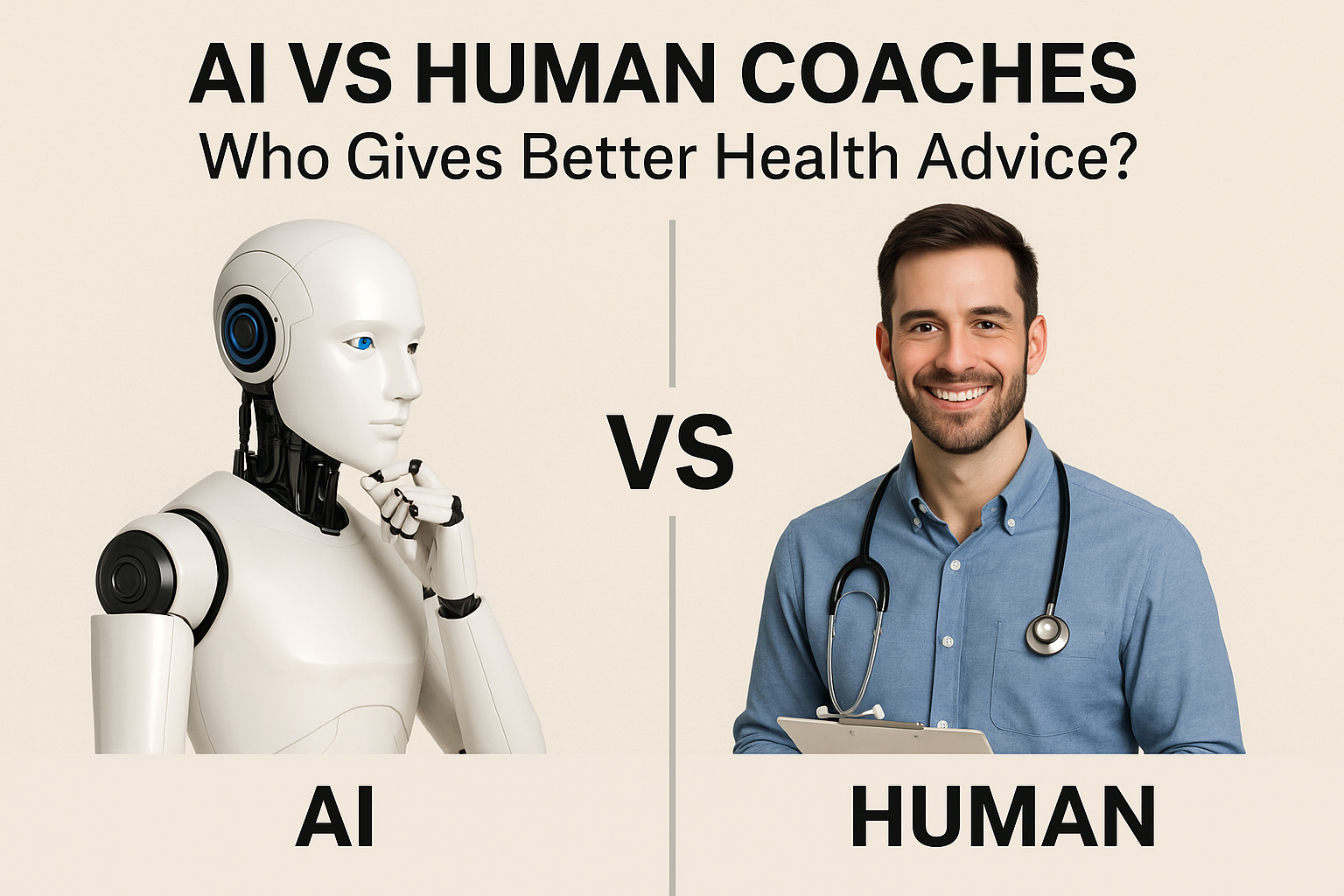
In today’s rapidly evolving digital age, health advice is just a tap away. With the rise of artificial intelligence (AI) in the health and wellness industry, a new debate has emerged: Can AI replace human health coaches? Or do human coaches still offer something uniquely valuable? This blog explores both sides to help you decide who gives better health advice — AI or human coaches.
The Rise of AI in Health and Wellness
Artificial Intelligence has made significant strides in recent years. From smartwatches tracking your heart rate to apps recommending personalized workouts and meal plans, AI has become a silent partner in our health journey.
Some of the most popular AI health tools include:
- ChatGPT for health Q&A and planning routines
- MyFitnessPal and Noom for nutrition and habit tracking
- Fitbit and Apple Health for daily health monitoring
- Mental wellness apps like Wysa and Woebot use AI chat for emotional support
These tools analyze your data, behavior, and preferences to give instant, personalized recommendations — something that was once only possible with human guidance.
SEO Tip: Best Keywords – AI health advice, health coach vs AI, best wellness apps, AI for weight loss, digital health tools
Benefits of AI Health Coaches
1. 24/7 Availability
AI-powered health apps are available around the clock. Whether it’s 3 AM or during your lunch break, you can access health tips, routines, or meditation exercises instantly.
2. Data-Driven Personalization
AI thrives on data. It can analyze your sleep, steps, calories, mood, and even stress levels to provide recommendations tailored to your lifestyle.
3. Cost-Effective
Unlike human coaches, most AI tools are free or budget-friendly. This makes quality health guidance accessible to more people.
4. No Judgment Zone
Some people may feel nervous opening up to a human coach. AI offers a judgment-free environment where users can express themselves freely, especially when dealing with sensitive health or mental health concerns.
Limitations of AI Health Coaches
Despite its strengths, AI has limitations when it comes to empathy, intuition, and adaptability.
1. Lack of Emotional Intelligence
AI can simulate conversations, but it can’t feel. Human coaches can detect subtle emotional cues, tone, and body language — things AI still struggles with.
2. Generic Responses for Complex Problems
AI may offer generalized suggestions for nuanced health problems. For instance, if someone struggles with anxiety rooted in childhood trauma, an AI might suggest breathing exercises, while a trained therapist could guide them through long-term healing.
3. Data Privacy Concerns
Using AI apps means sharing sensitive health data. Without proper security, there’s always a risk of data misuse or breach.
Human Health Coaches: The Personal Touch
A certified human health coach brings a level of experience, empathy, and motivation that machines can’t replicate — at least not yet.
1. Holistic Understanding
A human coach can consider your emotions, lifestyle, relationships, and mindset — things that deeply affect your health but are hard for AI to understand fully.
2. Real-Time Feedback
Human coaches can offer real-time corrections during workouts, nutrition advice based on cultural food habits, and emotional encouragement when you’re down.
3. Accountability Partner
One major role of a human coach is being your accountability partner. Knowing someone is checking in on your progress keeps you motivated and consistent.
4. Customized Coaching
While AI follows data algorithms, human coaches use both science and intuition to tailor health plans, often blending different methods based on client feedback and results.
Limitations of Human Coaches
Just like AI, human coaches have their drawbacks.
1. Higher Cost
Hiring a certified coach often involves monthly fees or per-session rates, which may not be affordable for everyone.
2. Limited Availability
Unlike AI, human coaches can’t be available 24/7. Scheduling can be a challenge for people with unpredictable routines.
3. Variability in Expertise
Not all coaches offer the same level of quality. Without proper certification or experience, some may give poor or even harmful advice.
The Best of Both Worlds: AI + Human Coaching
The smartest approach? Combine both.
Use AI tools for daily guidance — tracking meals, logging sleep, or suggesting exercises — and work with a human coach for deep transformation, motivation, and emotional support.
For instance, your smartwatch can remind you to stay active, while your coach helps you overcome mental blocks stopping you from reaching your goals.
Who Should You Choose?
Here’s a quick comparison:
| Feature | AI Health Coach | Human Health Coach |
|---|---|---|
| Availability | 24/7 | Scheduled sessions |
| Cost | Free or low-cost | Expensive |
| Emotional Support | Limited | Strong |
| Personalization | Data-driven | Empathy + intuition-based |
| Accountability | App reminders | Personal interaction |
| Best For | Daily tracking, habits | Motivation, mindset, goals |
Final Thoughts
So, who gives better health advice, AI or human coaches? The answer depends on your personal needs.
If you’re looking for quick, convenient, and data-driven insights, AI is your best friend. But if you need deep emotional support, holistic transformation, and accountability, a human coach is irreplaceable.
For optimal results, use AI to automate and track, and rely on human coaches for motivation and strategy. In the end, it’s not AI vs. human — it’s AI with humans that creates lasting health success.