
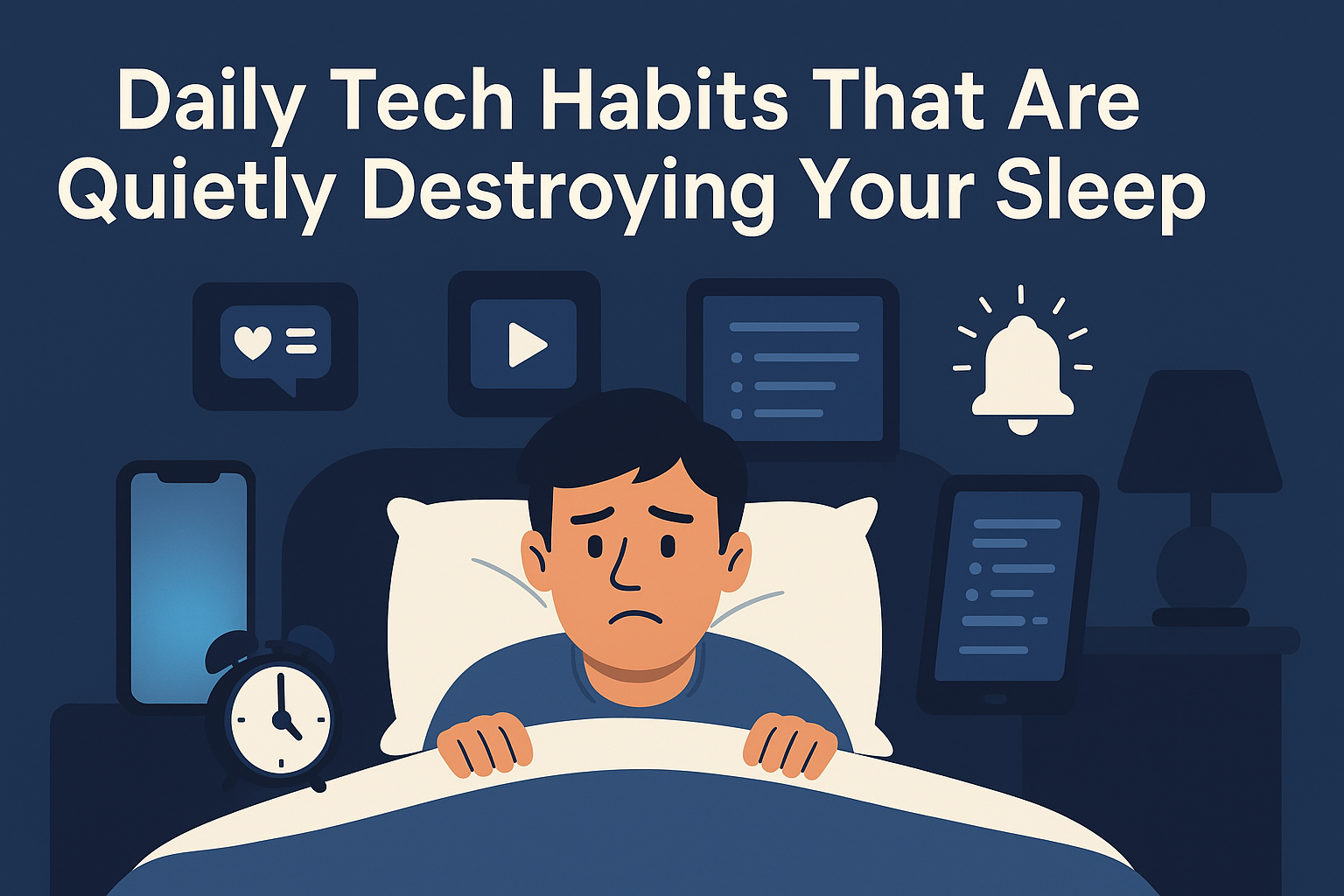
In today’s hyper-connected world, technology is everywhere—from the moment we wake up to the second we close our eyes at night. While our devices bring convenience and productivity, they may also be the culprits behind poor sleep. Without even realizing it, our everyday tech habits are interfering with the body’s natural ability to wind down, rest, and recover. If you’ve been struggling with restless nights, trouble falling asleep, or waking up feeling groggy, your daily tech use might be to blame.
Let’s explore the tech habits that are quietly destroying your sleep—and what you can do to reclaim restful nights.
1. Late-Night Screen Time
Problem:
Using smartphones, tablets, or laptops right before bed exposes your eyes to blue light. Blue light suppresses melatonin production, the hormone that regulates sleep. This delays your natural sleep cycle and makes it harder to fall asleep.
Solution:
Avoid screens at least 60 minutes before bed. If you must use a device, enable night mode or use blue light filtering apps like f.lux or the native night settings on your phone.
2. Scrolling Social Media in Bed
Problem:
Social media is addictive. The endless scroll of reels, memes, and updates stimulates your brain and raises stress levels, especially when you’re comparing your life to others or reading negative news. This psychological stimulation delays sleep onset.
Solution:
Make your bedroom a tech-free zone. Try replacing your phone with a book, journal, or meditation app with audio-only features. Setting a digital curfew can significantly improve your wind-down routine.
3. Using Your Phone as an Alarm Clock
Problem:
Keeping your phone by your bed makes it easier to check messages, browse the internet, or get distracted by notifications, disrupting your sleep before it even begins.
Solution:
Use a traditional alarm clock instead. If you must keep your phone nearby, put it on “Do Not Disturb” mode and place it face down or out of reach.
4. Binge-Watching TV Shows
Problem:
Streaming platforms make it effortless to lose track of time. Binge-watching leads to bedtime procrastination, also known as revenge bedtime procrastination, where you delay sleep to reclaim free time.
Solution:
Set limits with features like watch timers or stick to one episode per night. Avoid starting a new show close to bedtime.
5. Late-Night Gaming
Problem:
Video games elevate adrenaline, heart rate, and alertness—factors that are counterproductive to sleep. Competitive or fast-paced games can keep your mind in overdrive for hours.
Solution:
Limit gaming to earlier in the evening. Switch to slower-paced, relaxing games if you need a digital wind-down activity.
6. Bringing Work to Bed
Problem:
Checking work emails or completing tasks in bed blurs the boundary between work and rest. This keeps your brain in “productivity mode” and trains your mind to associate the bed with stress.
Solution:
Designate specific areas for work. Keep your bed sacred for sleep and intimacy only. If work thoughts are hard to shut down, consider writing a to-do list before bed to clear your mind.
7. Keeping Your Phone on Loud or Vibrate
Problem:
Notifications, vibrations, and even the glow of your phone screen can interrupt your deep sleep cycles. Even if you don’t fully wake up, your sleep quality is compromised.
Solution:
Activate sleep mode or focus mode on your device. Many phones now offer sleep settings that dim the screen, silence alerts, and adjust notification access.
8. Overuse of Sleep Tracking Apps
Problem:
While sleep trackers can provide useful insights, obsessing over the data can create anxiety. This condition, known as orthosomnia, can worsen sleep quality.
Solution:
Use tracking apps as guides, not rules. If you wake up feeling well-rested, don’t stress over imperfect data. Consider reviewing your sleep data weekly instead of daily.
9. Tech Clutter in the Bedroom
Problem:
Multiple devices in your sleep space—TVs, smart speakers, tablets—can overload your environment with EMF (electromagnetic frequencies), blue light, and mental stimulation.
Solution:
Minimize devices in your bedroom. Use blackout curtains, dimmable lights, and create a calm, tech-free sanctuary for better rest.
10. Using Caffeine and Energy Apps to Power Through the Day
Problem:
Tech-driven productivity encourages heavy caffeine use and energy supplements, which may interfere with sleep cycles, especially when consumed in the afternoon or evening.
Solution:
Monitor your caffeine intake and cut it off by 2 PM. Use focus-enhancing apps like Pomodoro timers to manage energy naturally during the day.
Final Thoughts
Technology is here to stay, but how we use it matters. By becoming more mindful of our daily tech habits, we can make simple changes that dramatically improve sleep quality. Prioritize screen-free time before bed, create a digital detox zone in your bedroom, and let your evenings be about rest, not stimulation.
Remember: better sleep isn’t just about the hours you clock—it’s about what you do before your head hits the pillow.